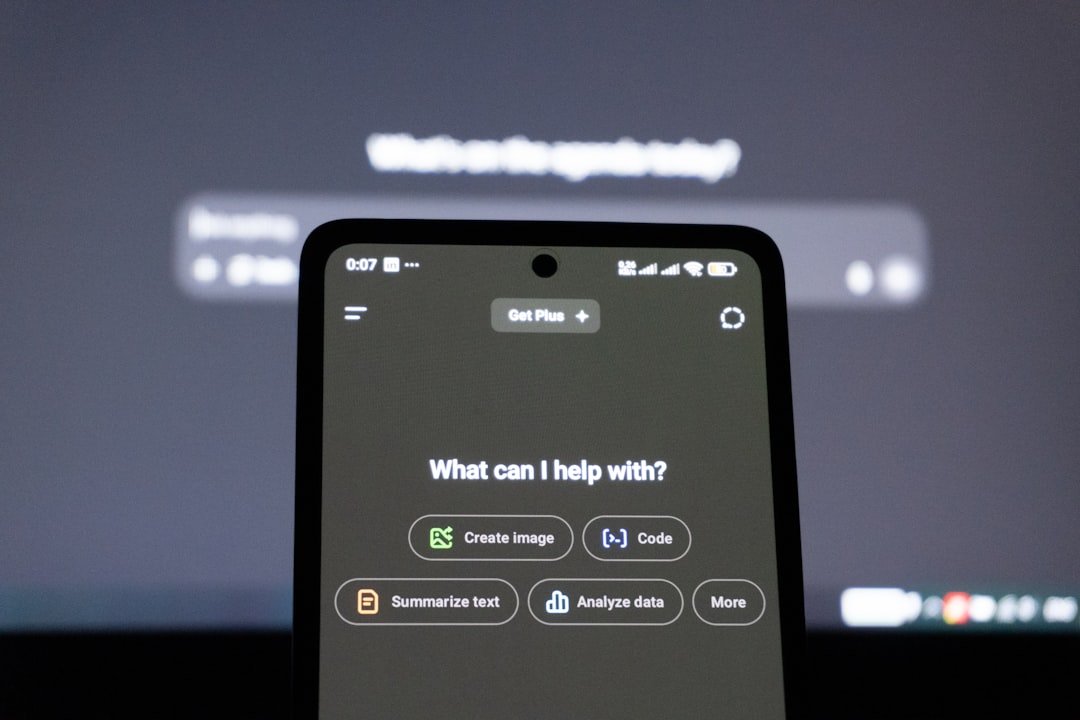
Supporting a diverse, international clientele is becoming more & more of a challenge for modern businesses, regardless of size. Using an AI chatbot created specifically for that purpose is the simplest way to offer efficient multilingual customer support on your website. These bots can instantly converse in a variety of languages, providing round-the-clock support without the need for a sizable, continuously staffed human customer support team. Customers expect prompt and effective answers when they visit your website.
Frustration sets in if they are unable to express their needs or comprehend the information in their preferred language. Convenience isn’t the only factor here; sales, customer satisfaction, & brand perception are all directly impacted. human resources that are limited. It is frequently unfeasible and costly to hire a customer service staff that speaks every language spoken by your clients. Even if you are able to assemble such a team, it is a logistical nightmare to staff it around-the-clock in various time zones.
In exploring the benefits of implementing a website AI chat bot for multilingual customer support, it’s essential to consider the foundational aspects of website performance and reliability. A related article that delves into these crucial elements is available at The Importance of Website Hosting: What You Need to Know. This resource highlights how effective website hosting can enhance user experience, ensuring that your AI chat bot operates smoothly across different languages and regions, ultimately improving customer satisfaction and engagement.
inconsistent quality of support. Inconsistent support quality may result from relying on human translators or representatives with different levels of fluency. Response times may deteriorate & nuances may be lost, particularly during busy times or for less widely used languages.
This discrepancy can undermine confidence and harm the image of your company. Opportunities lost & carts abandoned. Consider a prospective buyer who is prepared to make a purchase but is stuck on a technical detail that they are unable to explain in English. They may just walk away and locate a rival that provides assistance in their native tongue. Your bottom line is directly impacted by these lost opportunities, frequently without you even realizing how much you’ve lost. AI chatbots are more than just FAQs on a higher level.
Check out the latest AI Chatbot technology at ePower Online Marketing.
When properly constructed, they use advanced machine translation & natural language processing (NLP) to comprehend and react to consumer inquiries in a variety of languages. Quick Response and Translation. The chatbot’s ability to instantly translate incoming messages and provide responses in the customer’s native tongue is the main benefit. Delays that would arise with human translation services are eliminated because this takes place in real-time. The client receives information in a language they can comprehend and is not required to wait.
24/7 accessibility.
In today’s global marketplace, businesses are increasingly recognizing the importance of providing multilingual customer support through advanced AI chatbots. These innovative tools not only enhance customer satisfaction but also streamline communication across diverse linguistic backgrounds. For those interested in exploring how effective web hosting can further empower such AI solutions, a related article can be found here: unlocking web hosting’s power. This resource delves into the critical role that reliable web hosting plays in ensuring seamless online interactions, making it an essential read for anyone looking to optimize their customer support strategies.
Time zones & geographical restrictions are no longer relevant. Whether it’s 2 PM in New York or 3 AM in Tokyo, an AI chatbot is always available to assist. Customer satisfaction is greatly increased by this constant availability, which also lessens the strain on human agents during off-peak hours. scalability without raising expenses. The chatbot can expand its language skills as your company expands & enters new foreign markets without incurring a corresponding rise in operating expenses.
In the ever-evolving landscape of digital marketing, the integration of AI chatbots for multilingual customer support has become increasingly essential for businesses aiming to enhance their customer experience. These advanced tools not only facilitate seamless communication across different languages but also improve efficiency in handling inquiries. For a deeper understanding of how content plays a crucial role in this digital transformation, you can explore this insightful article on the importance of content in digital marketing. Check it out here to learn more about the strategies that can elevate your online presence.
Adding support for a different language usually entails training and configuration rather than hiring more employees. Because of this, it is an affordable option for growth. Not all chatbots are made equally, particularly in terms of their ability to speak multiple languages. Seek out particular features that guarantee real utility and a positive user experience. robust NLP (natural language processing).
The chatbot must comprehend both the words and their meaning. The bot can provide more accurate and useful answers by interpreting slang, colloquialisms, & even grammatical errors in different languages thanks to good NLP. Regardless of language, the bot will provide generic or irrelevant responses in the absence of strong NLP.
Superior Computer Translation. Although direct translation is an essential function, the translation’s quality is very important. Advanced machine translation models that can handle idioms, subtleties, and context-specific terminology across languages should be used by the bot. Misunderstandings and annoyance may result from poor translation.
In order to gradually increase accuracy, some sophisticated systems even permit human oversight or translation correction. Memory and Contextual Understanding. A useful chatbot retains past exchanges during a dialogue. The bot should keep the context when a customer asks a follow-up question or revisits a topic, avoiding repetitive inquiries and providing a more fluid dialogue experience.
This is particularly crucial in multilingual settings where it might be typical to rephrase a question. integration with databases of knowledge. Regardless of the content’s original language, the chatbot should be able to easily retrieve information from your current knowledge base, FAQs, and product documentation. The user is then presented with this information in their language after it has been translated. Strong indexing and retrieval systems are needed for this. Turn over to human representatives.
There will always be sensitive or complicated questions that an AI chatbot is unable to answer. An efficient system should recognize these circumstances and politely transfer the conversation to a human agent, giving the human access to the entire history of the exchange, including the language used. Customers won’t get caught in a never-ending loop with the bot thanks to this.
Choosing a vendor is not the only step in deploying a multilingual AI chatbot. Success requires careful planning and continuous upkeep. Prioritizing & choosing a language. Not every language can be supported right away.
Determine the primary languages used by your target markets and current clientele. To determine where multilingual support is most needed, examine sales data, customer service requests, and website traffic data. This guarantees that your resources are used prudently. Training and customization of data. The bot gets better the more data you feed it.
This entails teaching it your unique customer interactions, product terminology, & business procedures in every language that is supported. For off-the-shelf bots to be truly effective for your particular needs, they require extensive customization. Think about situations in which translations might require brand-specific language or industry jargon. Localization of content.
It involves more than just word translation; it involves localizing ideas. Make sure the chatbot’s responses are pertinent to the intended audience & suitable for their culture. This could entail more than just translating words; it could also entail changing examples, payment methods, or even greetings. continuous improvement & monitoring.
Chatbots are not “set it & forget it” devices. Keep a close eye on its performance, particularly when it comes to various languages. Look for situations where a human handover was required, areas where translations are incorrect, or frequently asked questions that it is unable to respond to. Utilize this input to continuously improve its translation capabilities, NLP models, & knowledge base. This iterative procedure is essential for sustained efficacy.
Security and privacy of data. Security and data privacy are critical when handling customer data, particularly when doing so internationally. Make sure the chatbot solution you’ve selected complies with applicable laws, such as the CCPA or GDPR, in all areas where it is supported. Recognize how customer data is handled, stored, and safeguarded. Beyond just responding to inquiries, a multilingual AI chatbot has advantages.
It may develop into a strategic advantage for your company. collection of enhanced customer data. There is a lot of data generated by chatbot interactions. Analyzing these multilingual exchanges can reveal information about common language-specific questions, popular product features in various regions, & customer pain points.
This information can help with lead generation, marketing plans, and product development. Lead qualification and active engagement. A bot can do more than just respond to queries; it can actively interact with users.
The bot can offer to respond to inquiries in German if a consumer is viewing a particular product page in that language. Also, it can collect contact details, ask qualifying questions, & even lead prospects through the sales funnel. When necessary, it can initiate human intervention & give the sales team rich context.
Cost reduction & operational efficiency. The chatbot greatly lessens the workload for your human customer support team by answering common questions in several languages. This increases overall operational efficiency and may lower staffing costs for multilingual support by freeing up human agents to concentrate on more intricate, valuable interactions. improved worldwide brand perception. No matter where a customer is, providing support in their native tongue shows that you appreciate their business.
This strengthens customer relationships & increases trust, which improves your brand’s reputation as a global, customer-focused company. It demonstrates a commitment to accessibility & client satisfaction. AI chatbot technology is dynamic. We can anticipate ongoing developments that will make them even more essential for multinational corporations. Conversations that are more organic & sympathetic. As AI and NLP develop, chatbots will show more natural, human-like conversational styles in addition to functional responses.
In order to further bridge the gap between human & machine interaction, this involves interpreting emotional cues from language and reacting in a more sympathetic manner. Multilingual Support with Voice Enabled. Customers will no longer need to type by speaking their questions in their native tongue thanks to the integration of voice AI. In order to provide a completely hands-free experience, the chatbot will process the voice input, translate it, produce a response, and then instantly translate that response back into spoken language.
more intricate customization. Future chatbots will provide hyper-personalized assistance by utilizing even more customer profiles & historical data. This could entail making customized product recommendations, providing pertinent cross-sells based on previous purchases in a particular language, or even foreseeing needs before a customer specifically requests them. There will be further tightening of the CRM system integration. proactive resolution of issues. Imagine a chatbot spotting a possible problem based on a customer’s order history or browsing habits in a specific area & proactively contacting the customer to offer help before they even consider asking.
This shifts from providing reactive assistance to proactively resolving issues despite language barriers. In conclusion, companies striving for global reach & customer satisfaction are finding that using an AI chatbot for multilingual customer support is becoming less of a luxury and more of a necessity. It’s a sensible investment that solves actual business issues, simplifies processes, and eventually enhances the effectiveness & inclusivity of the consumer experience.
Although it necessitates meticulous preparation, ongoing improvement, & a thorough comprehension of its advantages and disadvantages, the advantages are significant when executed properly.
.