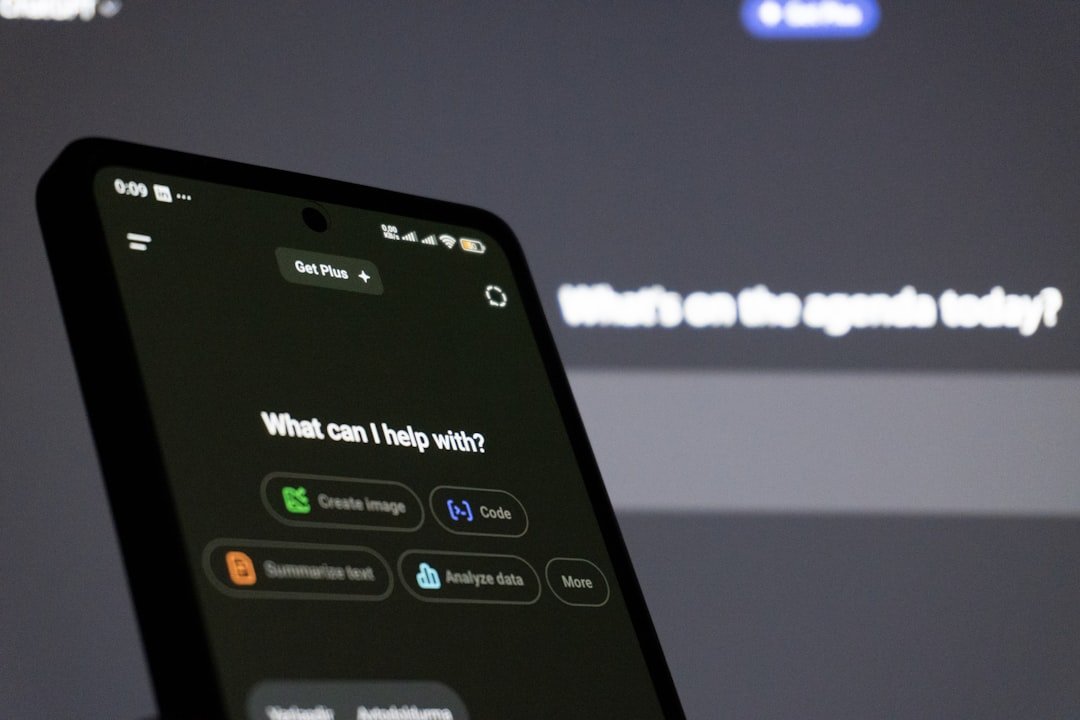
Let’s discuss automating frequently asked questions (FAQs) on websites using AI chatbots. To put it briefly, these bots are programs made to provide prompt, human-free answers to frequently asked customer questions. After creating a knowledge base by scanning the content of your website, your current FAQs, & even previous customer service encounters, they employ natural language processing (NLP) to comprehend user inquiries and offer pertinent responses. This allows your support staff to focus on more complicated issues while your customers receive prompt solutions to their everyday problems.
“Don’t I already have an FAQ page?” is probably what you’re thinking. Although helpful, a static FAQ page isn’t always the most effective way for clients to find solutions. They must scroll, go through the headings, and hope that the exact wording of their particular query matches what you’ve listed.
A chatbot completely alters this dynamic. Quick satisfaction for your clients. People in the fast-paced world of today demand prompt responses. Customers don’t want to wait for an email response or sit on hold if they have a straightforward inquiry about shipping, return guidelines, or product compatibility.
For businesses looking to enhance their customer service experience, implementing a website AI chat bot can be a game-changer for automating frequently asked questions. This technology not only streamlines communication but also ensures that customers receive immediate responses, improving overall satisfaction. To further explore how small businesses can optimize their online presence, you can read about affordable shared hosting plans in this related article: Affordable Shared Hosting Plans for Small Businesses.
They will have a much smoother and less annoying experience because a chatbot can respond to that query in a matter of seconds. This prompt resolution of issues can greatly increase customer satisfaction and lessen the possibility that they will abandon their cart or visit a rival business. Your Support Team Will Be Less Stressed. The relief that a FAQ chatbot provides to your customer service team is one of its most significant practical advantages.
Consider how frequently they respond to the same questions. Even though these are frequently the simplest questions, they nevertheless take up important time and resources. Your human agents can concentrate on more complex issues, forge closer bonds with clients, & handle special circumstances that genuinely call for human empathy and problem-solving abilities by automating these fundamental questions.
Check out the latest AI Chatbot technology at ePower Online Marketing.
As a result, the support staff becomes less burned out and more productive. Availability all the time. Customer inquiries never go away, even if your company closes for the night. Regardless of your time zone or business hours, a chatbot is always on and available to respond to inquiries day or night. Your customers can find information whenever they need it thanks to this constant availability, which helps you avoid possible sales losses from unanswered questions during off-peak hours. It’s similar to having a dedicated support agent working nonstop without the costs involved.
Implementing a website AI chat bot for automating frequently asked questions can significantly enhance customer engagement and streamline support processes. For businesses looking to improve their online presence and customer interactions, exploring various online marketing services can provide valuable insights. You can learn more about these services and how they can complement your AI initiatives by visiting this informative article on online marketing services.
It’s not necessary to become a developer to understand the inner workings of an AI chatbot for FAQs, but having a basic understanding enables you to recognize both its strengths and weaknesses. In essence, it combines carefully selected data with complex algorithms. NLP, or natural language processing. Natural Language Processing (NLP) is the foundation of any effective AI chatbot. This technology makes it possible for the bot to “understand” human speech.
Implementing a website AI chat bot for automating frequently asked questions can significantly enhance customer engagement and streamline support processes. For those interested in exploring how website design and hosting packages can complement such automation tools, a related article provides valuable insights into optimizing your online presence. You can read more about it in this informative resource that discusses the benefits of integrating advanced technologies into your website strategy.
Even if a user types a question with typos or different wording, natural language processing (NLP) deconstructs it, finds keywords, determines the intent, and interprets the meaning. It involves more than just matching exact phrases; it involves comprehending the query’s underlying meaning. Training Data and Knowledge Base. A knowledge base is where the chatbot gets its answers. Usually, a number of sources are used to create this knowledge base.
Current FAQs: There is a wealth of information on your current FAQ page. Product descriptions, policy pages, blog entries, and other pertinent content on your website can all be fed into the bot. Previous Support Tickets/Chat Logs: By examining prior customer support exchanges, the bot is able to identify typical problems and workable fixes. Manual Input: You can provide scripts for particular scenarios or directly enter answers to particular questions. Your chatbot will operate more precisely & efficiently if your knowledge base is more extensive and organized.
Consider it the bot’s manual. Identifying intent and extracting entities. The chatbot attempts to determine the “intent” once NLP has comprehended the query. At the same time, it does “entity extraction,” extracting important details from the query, such as whether the user is inquiring about a refund, shipping, or product features. When someone asks, “What’s the return policy for a blue shirt I bought last week?” for instance, the entities are “blue shirt” & “last week,” and the intent is “return policy.”. The bot is able to retrieve the most accurate response as a result.
fallback systems. Not every question can be answered by even the best chatbots. Fallback mechanisms are useful in this situation. A chatbot needs a polite way to respond when it truly doesn’t understand a question or can’t locate a pertinent response in its knowledge base.
These are typical fallbacks.
“I’m not sure about that, but are you asking about returns or exchanges?” is a suggestion for related questions. Transfer to a Human Agent: “I can’t respond to that query, but I can put you in touch with a live agent who can assist.”. The “. Information Gathering: “In order to assist you, I need more information. Would you kindly let us know your order number?
These backup plans are essential for avoiding dead ends & preserving customer satisfaction. It’s not difficult to implement a chatbot, but doing it well does take some consideration and work. It requires constant upkeep & improvement; it is not a “set it and forget it” tool. Selecting the Ideal Platform.
From basic rule-based systems to sophisticated AI-driven solutions, there are numerous chatbot platforms available. When making a decision, keep the following things in mind. Ease of Use: In the absence of coding expertise, how simple is it to construct and operate the bot? Integration: Does it work with the website, CRM, or support ticketing system you currently have? Scalability: As your company expands, will it be able to manage more complicated queries & more traffic?
Pricing: How much does it cost, including setup, monthly fees, and possible fees per interaction? Features: Does it provide analytics, handover options, NLP, and intent recognition? A good place to start is by doing some research and comparing a few options according to your budget and needs. expanding your knowledge base.
Perhaps the most important step is this. The quality of a chatbot depends on the data it has access to. Gather Current FAQs: To begin, compile all of your current FAQs. Examine your emails, chat logs, and support tickets from the previous few months to analyze your support data.
What are the most frequently asked questions by clients? What language do they use? This information is very useful. Categorize & Structure: Arrange your queries & responses in a logical manner.
Consider not just how you would phrase things internally, but also how customers might. Write Brief, Clear Responses: Chatbot responses ought to be succinct & direct. Whenever possible, stay away from jargon. If a question needs a more thorough explanation, think about providing a link to a page on your website with more information.
Keep in mind that the objective is to proactively respond to inquiries, so consider potential questions your clients may have. Educating Your Bot. You will “train” the bot after you have your knowledge base.
The following are involved. Mapping Questions to Answers: Provide multiple ways that a user could pose a question for each response. The bot’s comprehension improves with the number of variations. Testing in-depth: Make sure you thoroughly test the bot before launching. Ask coworkers or a small group of users to try to “break” it by using strange phrases or questions. Refining Intents: You’ll probably find instances in which the bot misinterprets intent as you test.
To increase the accuracy of the training data, you will have to go back & make adjustments. A high-performing chatbot must be built, tested, and refined iteratively. Starting a chatbot is only the first step; it’s not the end. You must keep an eye on its performance & make constant changes if you want to get real value.
essential metrics to monitor. By monitoring pertinent metrics, you can determine how well your chatbot is performing. Resolution Rate: An important measure of efficiency is the proportion of questions that the bot can successfully respond to without human assistance. Fallback Rate: A high fallback rate suggests that your knowledge base or training needs to be improved.
It is the frequency with which the bot is unable to respond to a query or must be turned over to a human. Customer Satisfaction (CSAT) Scores: Keep tabs on these scores if your chatbot platform permits a brief satisfaction survey following a conversation. Do clients find the responses satisfactory? Bot Usage: How many conversations does your bot process on a daily, weekly, or monthly basis?
This indicates how widely used it is & how many questions it is diverting from human agents. Most Frequently Asked Questions (Unanswered): Determine which questions the bot finds most challenging. This draws attention to your knowledge gaps. Your improvement efforts can be guided by the concrete data these metrics offer. Iterative improvement.
Consider your chatbot to be a living thing that requires constant attention. Examine Bot Conversations: Read through chat logs on a regular basis when the bot malfunctioned or was turned over to an agent. The most useful information about what isn’t working can be found here.
Update Knowledge Base: Make sure your bot’s knowledge base is updated in accordance with any changes to your policies, goods, or services. It is ineffective to use outdated information. Add New FAQs: Incorporate new, frequently asked questions into your bot’s training. Refine Training Data: You’ll need to spend time specifically training the bot on variations of a particular question if it frequently misinterprets it.
A/B testing: On certain platforms, you can test various chatbot responses or flows to determine which works best. This ongoing feedback loop guarantees that your chatbot will continue to be accurate, efficient, & relevant over time. AI chatbots aren’t a panacea for every customer service problem, despite their strength.
It’s critical to recognize when human interaction is essential & to comprehend their limitations. Absence of nuance and empathy. While chatbots are excellent at delivering factual information, they have trouble empathizing with people and comprehending complex emotions.
A bot’s predetermined response may come across as impersonal and unhelpful when a customer is irate, frustrated, or dealing with a very personal matter. A human agent who can actively listen, show empathy, and offer a tailored solution is nearly always needed in these circumstances. Managing Special or Difficult Issues. Chatbots use the knowledge base they have been trained to use. They are incapable of original thought or problem-solving.
A bot will probably run into trouble if a customer has a very uncommon problem, a custom request, or a complex issue that necessitates delving deeper into multiple systems. For troubleshooting, making decisions, and handling circumstances that don’t fit a predetermined script, human agents are crucial. procedures for escalation.
A good chatbot system doesn’t attempt to handle every problem on its own. It has explicit procedures for escalation. This means that when it determines that a user’s need is beyond its capabilities or when the user specifically asks to speak with someone, it can smoothly transfer a conversation to a human agent. A good customer experience depends on a seamless transition, ideally with the bot summarizing the exchange so the human agent has context. Attempting to make a bot perform a task for which it is ill-prepared will only result in annoyance and a bad impression of your assistance.
Using an AI chatbot to automate frequently asked questions is a practical way to increase customer service effectiveness and improve the customer experience in general. Optimizing human interaction is more important than completely replacing it. You enable your human team to concentrate on what they do best—solving complex problems and creating sincere connections—by taking care of the repetitive and routine tasks. You’ll find it to be a great asset if you use it as a tool to enhance rather than totally replace your current support.
.