In essence, landing page funnels are a sequence of carefully crafted web pages that lead visitors step-by-step to a particular action, such as purchasing a product, registering for a service, or downloading a resource. You’re not just throwing people onto a sales page & hoping for the best; instead, think of it as a carefully designed path. Rather, you’re fostering a relationship with them, gaining their trust, and making it simple for them to accept your offer. Creating a seamless, user-friendly experience that turns casual browsers into devoted clients is more important than simply putting a beautiful page online.
Let’s briefly discuss why these funnels are so important before we get into the “how,”. There is intense competition and short attention spans in today’s digital world. Although helpful, a stand-alone landing page frequently lacks the persuasiveness to turn a cold lead into a hot one. However, a funnel divides the conversion process into smaller, easier-to-manage steps.
If you’re looking to enhance your understanding of effective online marketing strategies, you might find this article on hosting trends and success strategies particularly insightful. It discusses the latest trends that can complement your landing page funnel efforts, ensuring that your online presence is optimized for success. You can read more about it in the article titled “Getting Around in the Future: The Best Trends and Success Strategies for Hosting” available at this link.
This lowers anxiety, gives important information when it’s needed, and increases momentum in the direction of the intended result. Developing a relationship is more important than just closing a deal. The Power of Progression: Beyond the Single Page. A funnel creates a story, whereas a single landing page may present your offer.
A funnel enables you to introduce concepts gradually. Can you imagine how overwhelming it would be to try to explain a complex product all at once? An attention-grabbing headline on the first page can draw readers in, followed by an explanation of the advantages and a response to any concerns, and a concluding page to seal the deal. This progressive disclosure helps users make an informed choice while maintaining their interest.
Sure, here is the sentence with the clickable link:
Check out our new Funnel Landing Page at https://funnel.epoweronlinemarketing.com/
Optimizing Your Marketing Investment. The goal of every advertising dollar should be to maximize the return on investment. You’re basically sending valuable traffic to a page that might not be optimized to convert them if you don’t have a well-thought-out funnel. Your marketing efforts are boosted by an effective funnel. You can improve conversion rates and make your ad spend more effective by leading visitors through a planned sequence that increases the likelihood that they will take the desired action.
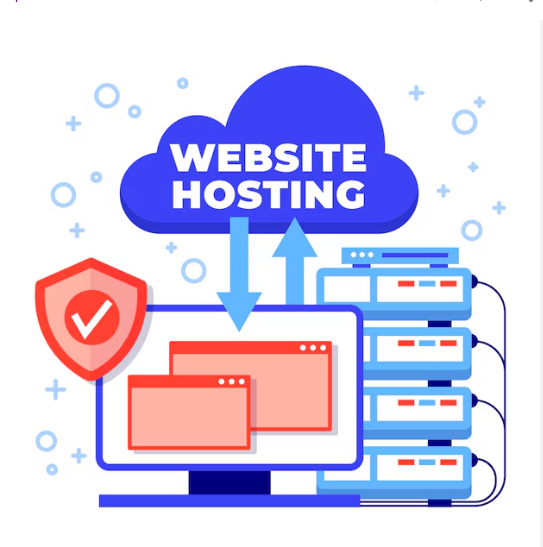
When optimizing your landing page funnel, it’s essential to consider how web hosting can impact your site’s performance and conversion rates. A well-structured landing page can significantly benefit from reliable hosting services, ensuring fast load times and minimal downtime. For more insights on enhancing your online presence, you might find this article on web development and hosting promotions in Malaysia helpful. Check it out here.
The structure of a landing page funnel greatly depends on your objectives; it is not a one-size-fits-all solution. Nonetheless, the foundation of the most successful funnels consists of common phases and components. Your Lead Capture Page serves as the gateway.
When creating an effective landing page funnel, understanding the importance of first impressions can significantly enhance your conversion rates. A related article that delves into this topic is available at Mastering the First Impression, which provides valuable insights on how to capture your audience’s attention right from the start. By applying the principles discussed in this article, you can optimize your landing pages to better engage visitors and guide them through your sales funnel.
This is frequently a visitor’s first encounter with your funnel. Obtaining their attention and contact information is its main goal. captivating headline and subheadline. This is how you initially perceive it.
It must communicate the value proposition clearly, succinctly, and right away. Be direct rather than clever for the sake of being clever. After that, the subheadline may slightly enlarge to provide a little more context. Offer Unstoppable (Lead Magnet).
If you want someone to give you their email address, you must provide something of value. An e-book, a free template, a video tutorial, a coupon code, or a free trial could be examples of this. The important thing is that it solves a problem for your target audience and is extremely relevant to them. concise & clear form.
Ask only what is necessary. For initial lead capture, an email address is typically adequate. Adding more fields will increase friction and reduce conversion rates.
Make it succinct and direct. vigorous call to action (CTA). This button must be conspicuous and provide the visitor with clear instructions on what to do next. Try “Get Your Free E-book,” “Download Now,” or “Start Your Free Trial” in place of just “Submit.”.
The CTA ought to be motivated by value. Establishing Trust and Outlining Value in the Nurture Stage. The funnel continues with pages intended to enlighten, educate, and establish rapport after you’ve obtained a lead. At this point, it’s important to show off your knowledge and how you can help them.
The “Thank You” or “Bridge” page. As soon as someone chooses to opt in, this page appears. It confirms their action, delivers the lead magnet, and occasionally introduces the subsequent step in your funnel, among other functions. Keeping the Promise.
Ensure that the lead magnet is within easy reach. Give them a direct download link or a detailed explanation of how to obtain it. A bad user experience results from delayed delivery. Introducing the Following Action. Use this page to gently introduce your main offer or the next logical step, rather than merely saying “Thanks.”. “As you take pleasure in your complimentary guide, see how our premium service can assist you even more.”. The page for sales (if applicable).
This is the time to fully explain your core offer if a direct sale is your goal. This page must be very convincing & respond to any possible criticisms. The PAS framework stands for Problem, Agitate, Solve. This traditional framework for copywriting works wonders.
Determine the primary issue facing your audience, agitate that issue by outlining the detrimental effects of failing to address it, and then position your product or service as the ideal remedy. characteristics & advantages. Don’t merely enumerate features; instead, turn them into advantages for the client. “Our software will save you Y hours per week” (benefit) replaces “Our software has X feature” (feature). Social proof and endorsements. Compared to businesses, people trust other people more.
Incorporate trust badges, case studies, reviews, and sincere endorsements (e. “g.”. “Highlighted in Forbes,” “10,000 happy clients”). Handling Objections (FAQ). Anticipate typical queries and objections from prospective clients and proactively address them on the page.
This lowers barriers to purchases & fosters trust. The Conversion Point: Motivating Them to Take Action. Here is where your visitors complete the last desired action. It ought to be as smooth as possible. the checkout page and order form.
This page must be extremely secure and clear if you are selling a good or service. Security and ease of use. Cut down on distractions. Just get the information you need.
To allay worries, make sure security badges (such as SSL certificates and payment processor logos) are prominently displayed. Pricing and shipping transparency. No unexpected costs. Before the final confirmation, clearly display the entire cost, including any taxes or shipping fees. Several ways to pay.
Provide well-liked payment options (credit cards, PayPal, etc.) to your audience. I). The Confirmation Page (After Conversion). Congratulate them on their action & offer crucial next steps. Assurance and Next Actions. Verify their purchase or enrollment.
Give instructions on what to do next, download links, or order details (e. “g.”. “Check your email for your login details,” “Your product will be shipped in two to three business days”). Opportunities for Upselling & Cross-Selling (Tactfully). After making a commitment, people are frequently receptive to new offers.
This is the perfect time to cross-sell (a related product) or upsell (a higher-tier version of what they just purchased). But be sincere, tactful, and non-aggressive. Successful landing pages are the outcome of meticulous planning and adherence to tried-and-true design principles. Clarity and Visual Hierarchy.
It should be simple to quickly scan and comprehend your page. Direct the visitor’s attention to the key components. above the content that is folded. On most devices, you should be able to see your main CTA and the important information without having to scroll. Although it’s not a strict guideline, this is a useful starting point. White space utilization.
Keep your page simple. Ample white space makes content easier to read and helps key elements stand out. It reduces visual fatigue.
High-Quality Imagery & Video. Visuals are incredibly powerful. Use professional, relevant images & videos that convey your message and evoke emotion. Avoid generic stock photos if possible.
Persuasive Copywriting Techniques. Words are your sales team on a page. Every word should have a purpose.
Benefit-Oriented Language. Focus on what your product or service does for the customer, not just what it is. Urgency & Scarcity (Used Responsibly).
Limited-time offers, countdown timers, or statements like “Only X remaining” can encourage immediate action. However, use these ethically and genuinely; false urgency damages trust. Strong Action Verbs. Your CTAs & other descriptive text should use strong verbs that prompt action. Mobile-First Responsiveness.
More than half of all web traffic comes from mobile devices. Your landing pages must look and function perfectly on smartphones and tablets. Fast Loading Times. Mobile users are impatient. Optimize images, minify code, & use reliable hosting to ensure your pages load in seconds.
Google PageSpeed Insights is your friend here. Tap-Friendly Buttons and Forms. Ensure all interactive elements are large enough and spaced appropriately for easy tapping on smaller screens. Avoid tiny fields or buttons.
Building a funnel is just the beginning. The real magic happens when you continuously test and refine it. A/B Testing Everything. Never assume anything.
Test different headlines, images, CTA button colors, form lengths, and even the order of your content. Setting Up Your Tests. Use tools like Google Optimize, Splitly, or built-in A/B testing features in your landing page builder.
Ensure your tests have a clear hypothesis (e. g. , “Changing the CTA button color from blue to green will increase conversions by 5 percent”). Analyzing Results and Iterating. Don’t stop at one test. Learn from each one & use those insights to inform your next iteration.
Small, consistent improvements add up to significant gains over time. Tracking and Analytics. You can’t improve what you don’t measure. Setting up robust analytics is non-negotiable. Conversion Goals in Google Analytics.
Define specific goals for each stage of your funnel (e. g. , “Submitted Lead Form,” “Completed Purchase”). This allows you to see exactly where visitors are dropping off. Funnel Visualization.
Many analytics platforms offer funnel visualization reports that visually represent the journey through your pages, highlighting bottlenecks. Heatmaps and Session Recordings. Tools like Hotjar or Crazy Egg can show you exactly where users are clicking, scrolling, and even getting frustrated on your pages. This qualitative data is invaluable for identifying usability issues.
Retargeting Strategies. Not everyone will convert on their first visit. Retargeting allows you to bring back interested, but unconverted, visitors. Pixel Placement. Install tracking pixels (e.
g. , Facebook Pixel, Google Ads remarketing tag) on all your landing pages to build custom audiences. customized advertising campaigns. Make targeted retargeting advertisements for visitors to particular pages in your funnel who did not proceed to the next stage. Even seasoned marketers can fall into these traps.
Being aware of them can save you a lot of headaches. Overcomplicating the Funnel. More steps don’t always mean better conversion. Keep your funnel as lean and direct as possible while still providing sufficient information.
Every additional step is a potential drop-off point. Lack of Consistency. Ensure your messaging, branding, & visual style are consistent across all pages in your funnel. A disjointed experience creates confusion and erodes trust.
If your ad promises ‘A,’ your landing page better deliver on ‘A,’ not ‘B. ‘. Ignoring Mobile Users. This was mentioned earlier, but it bears repeating. A non-responsive, slow, or clunky mobile experience will kill your conversion rates.
Period. Neglecting Post-Conversion Follow-Up. The funnel doesn’t end with a sale or signup. Nurture your new customers, thank them, offer support, and build loyalty. This could involve automated email sequences, exclusive content, or invitations to a community. Too Much Jargon or Technical Speak.
Speak in terms your audience understands. Avoid industry buzzwords or overly technical language unless your target audience is specifically technical and expects it. Clarity trumps cleverness every time. Mastering landing page funnels isn’t about finding a magic bullet; it’s about understanding human psychology, clear communication, robust design, and continuous optimization. By following these principles, you can build powerful, efficient funnels that not only attract visitors but consistently transform them into valuable customers for your business.
It’s a continuous process of learning and refining, but the rewards in increased conversions & stronger customer relationships are well worth the effort.
. For example, if they viewed your sales page but didn’t buy, show them an ad with a testimonial or a limited-time discount.
FAQs
What is a landing page funnel?
A landing page funnel is a series of web pages designed to guide a visitor towards a specific goal, such as making a purchase or signing up for a service. It typically includes a landing page, a thank you page, and possibly additional pages to further engage the visitor.
What is the purpose of a landing page funnel?
The purpose of a landing page funnel is to convert visitors into leads or customers by guiding them through a series of steps that build trust, provide information, and ultimately encourage them to take a specific action.
What elements are typically included in a landing page funnel?
A landing page funnel typically includes a compelling headline, persuasive copy, a clear call-to-action, and possibly a lead capture form. It may also include social proof, testimonials, and other trust-building elements to encourage visitors to take the desired action.
How can a landing page funnel be optimized for better results?
A landing page funnel can be optimized by testing different elements such as headlines, copy, images, and calls-to-action to see which combinations result in the highest conversion rates. It’s also important to ensure that the funnel is mobile-friendly and loads quickly.
What are some best practices for creating a landing page funnel?
Some best practices for creating a landing page funnel include keeping the design clean and uncluttered, using clear and concise language, and providing a compelling offer that addresses the visitor’s needs or pain points. It’s also important to track and analyze the performance of the funnel to make data-driven improvements.