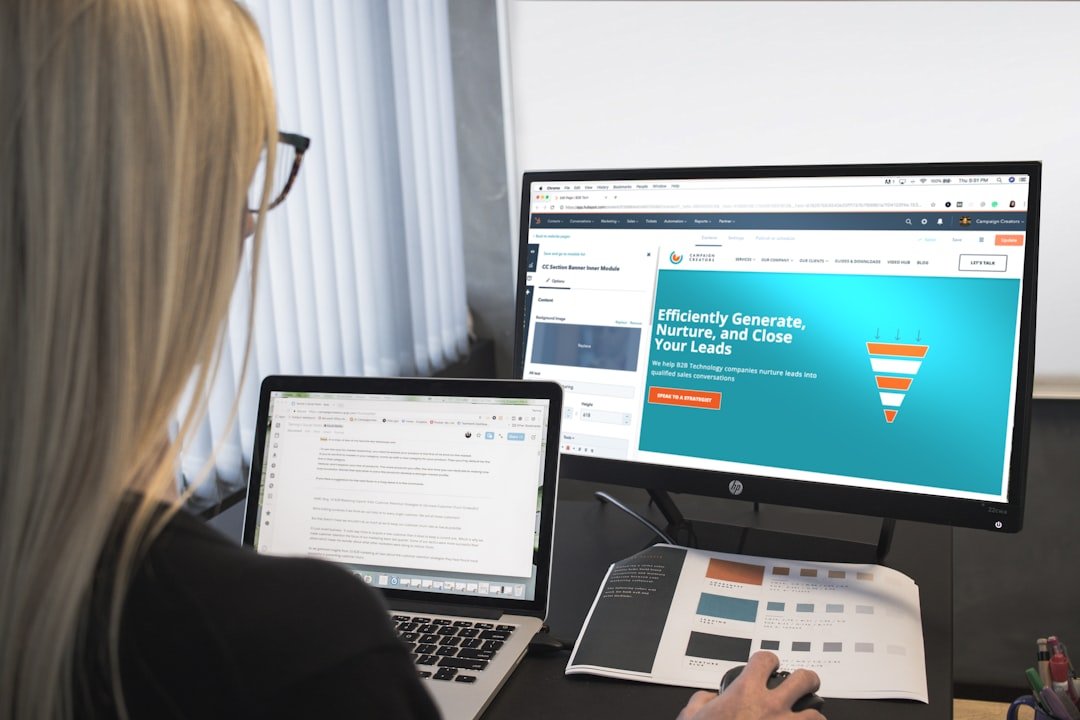
It basically comes down to a carefully considered series of pages and actions intended to lead your visitors from initial interest to becoming a customer or client. So how do you set up a landing page funnel that actually works? It takes more than a single page to make a seamless journey for them.
Let’s examine this more closely. Each page in a landing page funnel has a distinct function in bringing a visitor closer to the desired result. Consider it a well-planned route; you’re not merely directing visitors to your website; rather, you’re guiding them step-by-step toward conversion. The concept that some people will inevitably leave at each stage, leaving a smaller, more engaged group at the end, is where the term “funnel” originates. More than just one page.
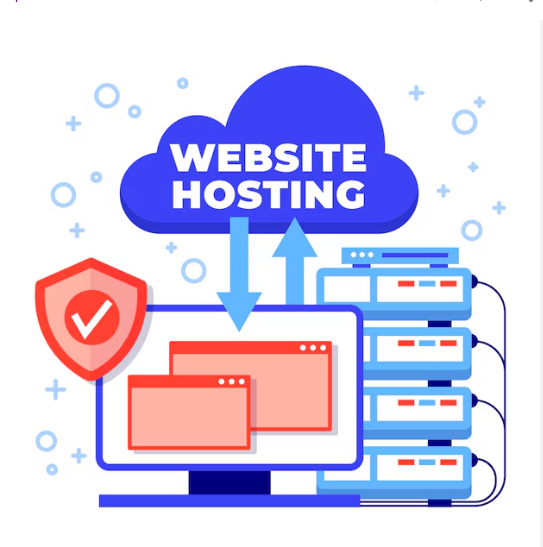
When setting up an effective landing page funnel, it’s crucial to consider the foundational elements that support its performance, such as reliable website hosting. For insights on why website hosting is vital for your online marketing strategy, you can read more in this related article: The Importance of Website Hosting: What You Need to Know. Understanding the role of hosting can help ensure that your landing pages load quickly and efficiently, ultimately enhancing user experience and conversion rates.
A “landing page funnel” is often mistaken for a single landing page. Even though that page is important, it’s really only the beginning of a longer journey. All subsequent pages and interactions are included in the funnel.
What Makes It More Than a Website? Information, branding, support, & other goals are frequently served by your primary website. On the other hand, a landing page funnel is intensely focused on a single objective, such as lead generation, product sales, event registration, etc.
Sure, here is the sentence with the clickable link:
Check out the amazing Funnel Landing Page at https://funnel.epoweronlinemarketing.com/.
Its effectiveness stems from this focus. You need a well-thought-out plan before you even consider copywriting or design. This is where you plan out the whole trip your guest will take. If you don’t have a clear plan, you’re just creating pages at random, which rarely works.
When setting up a landing page funnel, it’s essential to consider the hosting options that can support your online marketing efforts effectively. For small businesses looking for budget-friendly solutions, exploring affordable shared hosting plans can be a game-changer. You can find valuable insights on this topic in a related article that discusses various hosting options tailored for small enterprises. By choosing the right hosting plan, you can ensure that your landing page performs optimally, leading to higher conversion rates. To learn more about these hosting solutions, check out this informative piece on affordable shared hosting plans for small businesses.
defining your objective. Every funnel requires a precise, quantifiable goal. What exactly do you want people to do? Provide leads? (e.
When setting up a landing page funnel, it’s essential to consider how various tools can enhance user experience and conversion rates. One such tool is an appointment booking calendar, which can streamline the process for potential clients. For more insights on this topic, you can explore the article on how to unlock your clients’ benefits from an appointment booking calendar. Integrating these features into your landing page can significantly improve engagement and drive more conversions.
The g. email sign-up for an electronic book). Make a sale? (e.
The g. buying a certain product). Sign up for a gathering? (e. g.
webinar registration). Make an appointment for a consultation? A g. a sales representative’s appointment).
Be accurate. “Get more customers” lacks specificity. “Get 100 webinar registrations by next month” is the goal. Recognizing your audience. Knowing your target audience’s needs, wants, and motivations will help you better tailor your offers and messaging. Demographics include things like age, location, and occupation.
Psychographics include aspirations, challenges, fears, and hopes. Behavioral: What do they look up online? Which websites do they visit? Your offer, your copy, and even the layout of your pages will be directly impacted by this realization. Outlining the Path (Your Funnel Stages).
This is where the flow is visualized. Although it can vary, a typical funnel might look like this. Stage 1: Discovery/Awareness (Traffic Source). This is how people discover your initial landing page, not the landing page itself. Google Ads, Facebook Ads, and LinkedIn Ads are all paid.
Organic Search: Blog entries that are optimized for search engines and direct brand searches. Social media: stories, posts, and partnerships with influencers. Email marketing: Including links in promotional or newsletters. The important thing to remember is that the message on your landing page and the message in your traffic source should be exactly the same.
You lose people right away if you don’t match. Stage 2: Lead capture on the first landing page. This is the initial page that your visitor will see. Its main function is to hook them and persuade them to take a tiny first step.
Goal: Describe your offer, explain its worth, and gather fundamental data (e.g. “g.”. (email address). Important components include an attention-grabbing headline, a distinct value proposition, an effective call to action (CTA), minimal navigation, and pertinent images or videos. Stage 3: The Thank You Page (Advice for the Next Step). Critical but often ignored.
Don’t just leave someone hanging after they convert on your first landing page. Goal: Verify their behavior, provide the promised item (if applicable), & direct them to the following stage of your funnel. Crucial components include a confirmation message, a download/access offer link, and a powerful secondary call to action (e.g.
The g. “Browse related products,” “Join our Facebook group,” and “Schedule a demo”. Nurturing Sequence (Building Trust) is the fourth stage. Email (or other forms of communication) can help with more complicated sales or leads that need to be warmed up. Goal: Provide value, foster trust, dispel objections, & encourage leads to make a purchase.
Key Components: A sequence of automated emails featuring case studies, testimonials, helpful content, and progressively stronger calls to action. Here, you should explain why your solution is the most appropriate for their issue. Step 5: The Conversion/Sales Page (The Ask). Here’s where you make your big request: buy something, schedule a demo, or sign up for a pricey item. Goal: Describe your entire product or service, highlight its advantages, allay any worries, & encourage the last conversion.
Important components include a thorough description, social proof (reviews and testimonials), FAQs, transparent pricing, a compelling call to action, and perhaps a guarantee or urgency elements. Stage 6: Onboarding/Post-Conversion. After they convert, this page initiates the onboarding process and verifies the final action.
Goals: Verify purchase or registration, grant access to the product or service, and outline the next steps for getting going. Important components include order confirmation, login information, support resource links, welcome videos, and calls to action for additional engagement. Every page in your funnel must be extremely optimized. Recall that effectively guiding your visitor is more important than simply looking good. The first landing page is what you see right away.
Your virtual handshake is this page. It must draw attention right away and convey value. headline that grabs attention. Prioritize clarity over cunning: Avoid ambiguity. Clearly state the primary advantage or offer.
Benefit-driven: Pay attention to their gains rather than your own. Emotional connection: Take care of a desire or a pain point. Bad: “X is done by our software.”. A “.
Good: “Stop Wasting Hours on X: Use Our Software to Reclaim Your Time.”. The “. concise and clear writing. Scannable: Make use of bold text, bullet points, and brief paragraphs.
Framework for problem-solving: Determine their issue, then offer your solution. Benefits should take precedence over features: “Our software has a reporting module” is a feature. “Get instant insights into your business performance” (advantage). Match message to source: The landing page should mention the free guide right away if they clicked on an advertisement about it. An alluring offer.
This is the purpose of the information exchange. It must have sufficient value. e-books, manuals, checklists, & templates. Webinars, free trials, & consultations. savings and free shipping.
vigorous call to action (CTA). Verbs that are action-oriented include “Download Now,” “Get Your Free Ebook,” and “Start Your Trial.”. A “.
Benefit-focused: “Open My Productivity,” “Claim My Discount.”. The “. Make it visually striking by using contrasting colors and turning it from text to a button. Single focus: Each landing page should have a single main call to action. Don’t make confusing decisions.
Very few distractions. No menus for navigation: Your objective is conversion, not discovery. Keep visitors on your page by limiting the number of external links. Clean design: Steer clear of clutter. White space is to your advantage.
Pop-ups: If you use them at all, use them sparingly and time them carefully (e.g. (g). exit-intention). components of trust. Testimonials & reviews: Social proof is very effective.
Payment pages in particular should have security badges. Link to privacy policy: Gives visitors peace of mind about the security of their data.
“As seen on” logos: If you’ve appeared in a reputable publication. The Thank You Page: Not Just a “Thanks”. This page is not a conclusion, but an opportunity. Verification and Delivery.
Verify their action, for example. The g. “Your download is on its way!”. If at all possible, make the offer immediately accessible (direct download link). A follow-up call to action.
What makes sense for them to do next on their journey?
“Follow us on the internet. The “. See our related blog entries. The “.
“Set up a free demonstration.
A “.
“Tell a friend about this offer. The “. This keeps them in your ecosystem & enhances engagement. Let’s move on to the construction itself.
The fundamentals are the same, despite the variety of tools available. Selecting your equipment. A wide range of tools are available for creating funnels. Your choice will be influenced by your desired features, technical proficiency, and budget. Leadpages, ClickFunnels, Unbounce, and Instapage are landing page builders.
They frequently incorporate analytics and A/B testing and are easy to drag & drop. Webflow, sq\.space, & WordPress (with plugins like Elementor and Beaver Builder) are website platforms with landing page capabilities. More control, but possibly more setup. Email marketing platforms include HubSpot, ActiveCampaign, ConvertKit, and Mailchimp. necessary for your nurturing sequences.
seamless incorporation. It is necessary for the various components of your funnel to communicate. Form submissions to email lists: When a visitor completes a form on your landing page, their data must be sent straight to your email marketing system.
Usually, tools like Zapier or direct integration are used for this. CRM integration: Make sure new leads are added to your customer relationship management system (such as HubSpot, Salesforce, or Zoho CRM) for tracking and follow-up. Analytics configuration: Verify Google Analytics and any additional tracking pixels (e.g. A g.
Facebook Pixel) are set up on each page of your funnel. This is essential to comprehending performance. naming conventions. Don’t change the names of your pages or assets.
Analysis and organization are aided by this. Yourdomain . com/free-ebook-lp & yourdomain . com/free-ebook-thank-you are two examples.
It’s not a “set it and forget it” device. It requires ongoing evaluation and enhancement. observing important metrics.
To determine what is working (or not), it is essential to know what to measure. Traffic Sources: According to Google Analytics, where are your visitors coming from? Conversion Rates: At each stage, how many people are performing the desired action? Landing Page Conversion Rate: (Visitors/Leads) * 100. Engagement on the Thank You Page: (Clicks on secondary CTA/Page Visitors) * 100.
Email Open/Click Rates: (Platform for email).
(Sales / Visitors to Sales Page) * 100 is the sales page conversion rate. Cost Per Lead (CPL) & Cost Per Acquisition (CPA): How much does it cost you to acquire a single lead or customer (ad platforms + your own calculations)? Bounce Rate: How many visitors leave your landing page right away without interacting? High bounce rates frequently point to a poorly designed page or a mismatch between the ad and the page. Time on Page: What is the average amount of time visitors spend on your pages?
A/B (Split) testing. Your secret weapon for progress is this. Test, not guess! Headline variations: What is the most compelling headline? Does “Get Your Guide” perform better than “Download Now”?
Is a red button more effective than a green one? Placement of images and videos: Does including a video improve engagement? Form length: Do shorter forms result in higher conversion rates?
Provide variations: Is a checklist more effective than a template? Does rearranging the elements on a page affect its performance? One component at a time, run tests, collect sufficient data, and then implement the winner. Iteration and improvement. Make adjustments based on your data without fear. Examine your headline, copy, offer, or form if your landing page conversion rate is low.
Is there an imbalance between traffic and pages? Is your secondary call to action compelling enough if the engagement on your Thank You page is low? Improve your sender name and subject lines if your email open rates are low. Improve the copy and calls to action in your emails if your click-through rates are low.
If your sales page isn’t converting, is there sufficient social proof, is the offer clear, is the price reasonable, and are objections addressed? Review your data frequently, make well-informed changes, and continue testing. You can really master your landing page funnel in this way.
.
FAQs
What is a landing page funnel setup?
A landing page funnel setup is a series of web pages designed to guide visitors through a specific conversion process, such as signing up for a newsletter, purchasing a product, or registering for an event. It typically includes a landing page, thank you page, and possibly additional pages to further engage and convert visitors.
What are the key components of a landing page funnel setup?
The key components of a landing page funnel setup include a compelling landing page with a clear call-to-action, a thank you page to confirm the action taken, and possibly additional pages for upselling, cross-selling, or providing more information to further engage and convert visitors.
How can a landing page funnel setup benefit a business?
A well-designed landing page funnel setup can benefit a business by increasing conversion rates, capturing leads, and guiding visitors through a specific conversion process. It can also help businesses track and analyze the effectiveness of their marketing efforts and optimize their conversion funnels for better results.
What are some best practices for setting up a landing page funnel?
Some best practices for setting up a landing page funnel include creating a clear and compelling value proposition, using persuasive and relevant content, optimizing for mobile devices, testing different elements to improve performance, and integrating with analytics tools to track and measure results.
What tools or platforms can be used to set up a landing page funnel?
There are various tools and platforms available for setting up a landing page funnel, including dedicated landing page builders like Unbounce or Leadpages, marketing automation platforms like HubSpot or Marketo, and website builders with built-in funnel features like WordPress or Wix. Each option offers different features and capabilities to suit different business needs.