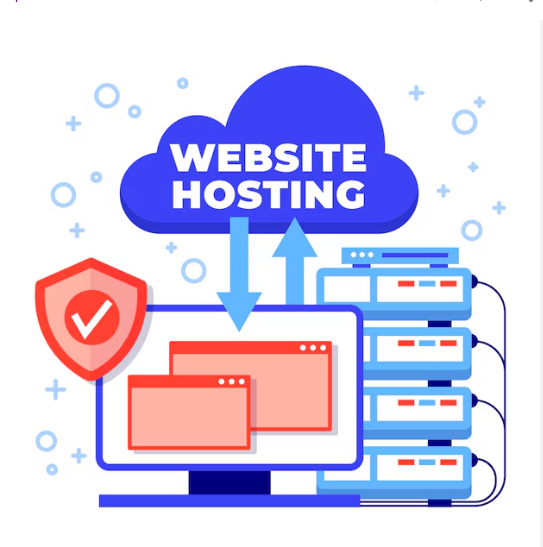
One of the first things you’ll need when starting a website is hosting. To put it simply, web hosting is the process of storing all of your website’s files—including text, images, and code—on a dedicated computer known as a server. These files are sent to the user’s computer by the server when they enter the URL of your website into their browser. Consider it akin to renting a piece of land for your virtual residence. With no technical jargon, this guide will walk you through everything you need to know to launch your website.
Fundamentally, web hosting allows anyone with an internet connection to view your website. Without hosting, the files for your website would remain on your computer and be only accessible to you. A hosting company provides the infrastructure required to store your website and make it accessible to users all over the world, including strong servers, network connections, and data centers. The server is the home base of your website. Specialized computers called servers are made to run constantly and manage multiple requests at once. Your website will always be accessible because they are always connected to the internet.
If you’re new to the world of website hosting and looking for a comprehensive introduction, the article “Website Hosting for Beginners: Step-by-Step Guide” is an excellent resource. It provides essential insights into the various types of hosting services available and helps you choose the right one for your needs. Additionally, you may find it beneficial to explore related topics in the article on future trends and strategies in hosting, which can be found here: Getting Around in the Future: The Best Trends and Success Strategies for Hosting. This can further enhance your understanding of the hosting landscape as you embark on your website journey.
Your browser sends a request to your server when a user visits your website, and your server responds by delivering the requested webpages. Data centers: Server communities. There is more to servers than just them sitting in someone’s basement. They are kept in safe establishments known as data centers.
These facilities have climate control to prevent overheating, redundant power supplies, and strong security measures to safeguard the actual hardware. They are made to minimize downtime for your website by maintaining servers’ dependability and efficiency. What You Get: Bandwidth and Storage.
Sure, here is the sentence with the clickable link:
Check out our website hosting services at website hosting.
Terms like “bandwidth” and “storage” are frequently used when selecting a hosting plan. Storage is the amount of server space that your website’s files can take up. Think of it as your computer’s hard drive space.
If you’re just starting out with your online presence, understanding the basics of website hosting is crucial for your success. A great resource to explore is the article on brand marketing strategies, which can help you enhance your visibility once your website is up and running. You can find it here: boost your brand’s visibility. This information complements the step-by-step guide on hosting for beginners, ensuring you have a solid foundation to build your online brand effectively.
Alternatively, bandwidth is the quantity of data that can be sent from your server to your visitors in a given amount of time. Think of it as the capacity of the road that leads to your website; more bandwidth allows more traffic to flow through without interruption. Web hosting comes in a variety of forms, each appropriate for varying requirements & price ranges. Knowing the differences will enable you to select the best option for your project.
If you’re just starting out with creating your own website, understanding the basics of hosting is crucial. A great resource to help you navigate this process is the article on Website Hosting for Beginners: Step-by-Step Guide, which provides clear and concise information tailored for newcomers. This guide covers everything from choosing the right hosting provider to setting up your domain, ensuring that you have a solid foundation for your online presence.
The affordable option is shared hosting. The most popular and affordable choice for newcomers is shared hosting. When you use shared hosting, a server is shared by numerous websites. This implies that all of the server’s sites share resources like CPU, RAM, and disk space. Advantages: Very inexpensive, simple to set up, & a lot of providers provide basic management tools. Cons: Other websites running on the same server may have an impact on performance (the “noisy neighbor” effect).
fewer options for configuring servers. Ideal for: New websites with low traffic expectations, very small business websites, portfolios, & small personal blogs. VPS hosting is an improvement over shared hosting. A compromise between shared hosting and dedicated hosting is provided by virtual private server (VPS) hosting. Each VPS receives a dedicated portion of the server’s resources, even though you still share a physical server with other users.
Imagine living in an apartment complex with individual plumbing & electrical systems. Advantages: More control over the server environment, scalable resources, and superior performance and dependability compared to shared hosting. Cons: More costly than shared hosting; management calls for a little more technical expertise (although managed VPS options are available). Ideal for: Developers who require more control without the expense of a dedicated server, small to medium-sized businesses, e-commerce sites with moderate traffic, and growing websites.
Your Own Private Island with Dedicated Hosting. You get a whole physical server to yourself when you use dedicated hosting. The operating system, software, and resources on the server are entirely under your control. The most potent and costly hosting choice is this one. Advantages: Control, security, and maximum performance. Perfect for resource-intensive apps and websites with high traffic.
Cons: Highly costly; requires a great deal of technical know-how to operate efficiently. Ideal for: Applications with particular server requirements, large e-commerce platforms, high-traffic websites, & enterprises. Cloud hosting is scalable and adaptable.
Cloud hosting hosts your website by utilizing a network of linked servers. Your website is distributed across several virtual servers rather than being on a single server. High availability is ensured when a server in the network fails. Advantages include pay-as-you-go pricing models, scalability (easily adding or removing resources as needed), and high dependability & uptime. Cons: Compared to dedicated hosting, there is less control over the underlying infrastructure, and pricing can be complicated & erratic.
Ideal for: Businesses requiring high availability, websites with varying traffic, and applications needing strong scalability. WordPress Hosting: Platform-specific. Certain WordPress hosting plans are offered by numerous hosting companies. These packages are tailored for WordPress websites and frequently include security features, specialized caching, and WordPress pre-installed.
They are designed to improve your WordPress experience and can be shared, VPS, or even cloud-based. Advantages: WordPress-specific tools and security, specialized support, and enhanced performance. Cons: For WordPress websites in particular, it may be a little more costly than generic shared hosting. Ideal for: Anyone using WordPress to develop a website.
For your website to succeed, choosing a reliable hosting company is essential. Don’t just choose the least expensive option; take these things into account. Uptime Reliability: You must have a live website. The percentage of time your website is accessible online is known as its uptime. At least 99.9% uptime is guaranteed by a reputable hosting company.
Anything less implies that your website might be frequently down, which would result in a loss of visitors and potential clients. Seek out suppliers who have a clear downtime policy and publicly share their uptime statistics. Performance (Speed): A slow website is disliked by all. A website’s speed is important for both search engine optimization & user experience. Slow websites can increase bounce rates and irritate users.
Look for features that improve speed offered by the hosting company. SSD Storage: Compared to conventional hard disk drives, solid-state drives are substantially faster. Content Delivery Network (CDN): A CDN speeds up load times by storing copies of your website’s content on servers all over the world and delivering it from the server nearest the visitor. Caching techniques: A web page’s serving time can be greatly shortened by using server-side caching.
Customer service: In the event of an issue. Even seasoned users have problems. Good customer service can save lives. Look for providers that offer:.
24/7 assistance: Through tickets, live chat, or the phone. Knowledge base/documentation: You can solve common issues on your own with the aid of thorough instructions and frequently asked questions.
Staff that is knowledgeable and responsive: Read reviews to determine how well they provide assistance. Security Features: Protecting Your Investment. The security of your website is crucial. A competent host will provide a number of security measures.
SSL certificates, which appear as “https” in the URL and frequently have a tiny padlock icon, are crucial for encrypting data between your website and visitors. Free SSL certificates are available from many hosts. Firewalls: To defend your server from malevolent assaults. Malware scanning and removal: To find & get rid of dangerous software. Regular backups: To ensure you can restore your website if something goes wrong.
Options for Scalability: Expanding Your Website. Your hosting requirements may alter as your website expands. Select a supplier that provides simple upgrade routes. Long-term planning requires the ability to switch from shared hosting to VPS or dedicated hosting with minimal difficulty or downtime. Read the fine print regarding pricing and renewal fees.
Pay special attention to renewal rates, even though initial introductory prices may be appealing. First-term rates are frequently drastically reduced by hosting companies, but they can rise dramatically upon renewal. Recognize what is included in the price, such as email accounts, SSL, and domain names. — as well as any potential additional expenses. There are a few crucial steps involved in setting up your website after selecting a hosting company and plan.
Domain Name Registration: The Address of Your Website. Your website’s distinct online address is called a domain name (e.g. The g. your website .
com). The majority of hosting companies provide domain registration services, which are frequently included with hosting packages, particularly for the first year. If not, you can point it to your hosting account after registering it with a different domain registrar. Creating the Connection: Connecting Your Domain to Hosting (DNS). After obtaining a domain & hosting, you must link them.
DNS settings are used to accomplish this. You will receive specific nameservers (usually something like ns1) from your hosting provider. ns2 and yourhost . com. (yourhost.com).
You will input these nameservers into the control panel of your domain registrar. This indicates to the internet where the files on your website are located. DNS changes may take a few hours to up to 48 hours to spread.
Getting Started: Installing Your Website Platform. A Content Management System (CMS) is what most novices use to create their websites. The most widely used option is WordPress. One-Click Installers: In their control panel (cPanel, Plesk, or their own panel), the majority of hosting companies provide “one-click” or “auto-installers” (such as Softaculous).
Installing WordPress (or Joomla, Drupal, etc.) is made easier by these tools. incredibly simple, frequently just requiring a few clicks & some basic knowledge. Manual Installation: You can install WordPress manually if you’re feeling daring or if your host does not provide an auto-installer. This entails downloading the WordPress files, setting up a database, and sending the files via FTP to your server.
This is a little more complicated, but if you want to give it a try, there are many online tutorials available. Using your hosting dashboard, the Control Panel. You can manage your hosting account through a web-based interface called a control panel, which is provided by the majority of hosting companies. Some hosts use their own panels, but cPanel and Plesk are popular choices. You can do so here.
Organize, download, and upload the files for your website. Establish email accounts: Assign email addresses to your domain. Database management is crucial for content management systems such as WordPress. Track resource usage and website traffic by viewing statistics.
Configure redirects: To transfer old pages to new ones. Install SSL certificates in order to protect your website. There are continuing things to think about once your website is operational. Frequent Backups: Prevent Work Loss. Even with a trustworthy host, mishaps are possible. Always have a backup plan in place.
Although many hosts provide daily backups, you can add an additional layer of security by creating your own independent backups. You can download full site backups on a regular basis or utilize WordPress plugins. Website Security: A Constant Work.
Security is not a one-time event. It demands constant attention. Maintain the platform for your website (WordPress, Joomla, etc.). and all themes and plugins have been updated to the most recent versions.
Make sure every account connected to your website has a strong, one-of-a-kind password. For extra security, think about installing security plugins. Keep an eye on things when it comes to website performance.
Regularly monitor the speed & uptime of your website. You can find performance bottlenecks with the aid of tools like GTmetrix and Google PageSpeed Insights. You may need to think about upgrading your hosting plan or optimizing your website if your traffic increases or it begins to slow down.
Future Planning: Renewals and Upgrades. Remember the dates of your domain renewal and hosting. Although auto-renewal is convenient, be sure to understand the renewal fees. You will eventually outgrow your original hosting plan as your website expands. When the time comes, don’t be afraid to switch to a more reliable option like VPS or even dedicated hosting.
Waiting too long can cause your website to operate slowly & give users an unreliable experience. It may seem difficult to choose the best web hosting, but if you know the various kinds and what to look for in a provider, you can make an informed choice that will help your website succeed. Start with what suits your needs and budget right now, keeping in mind that you can always upgrade as your website develops.
.