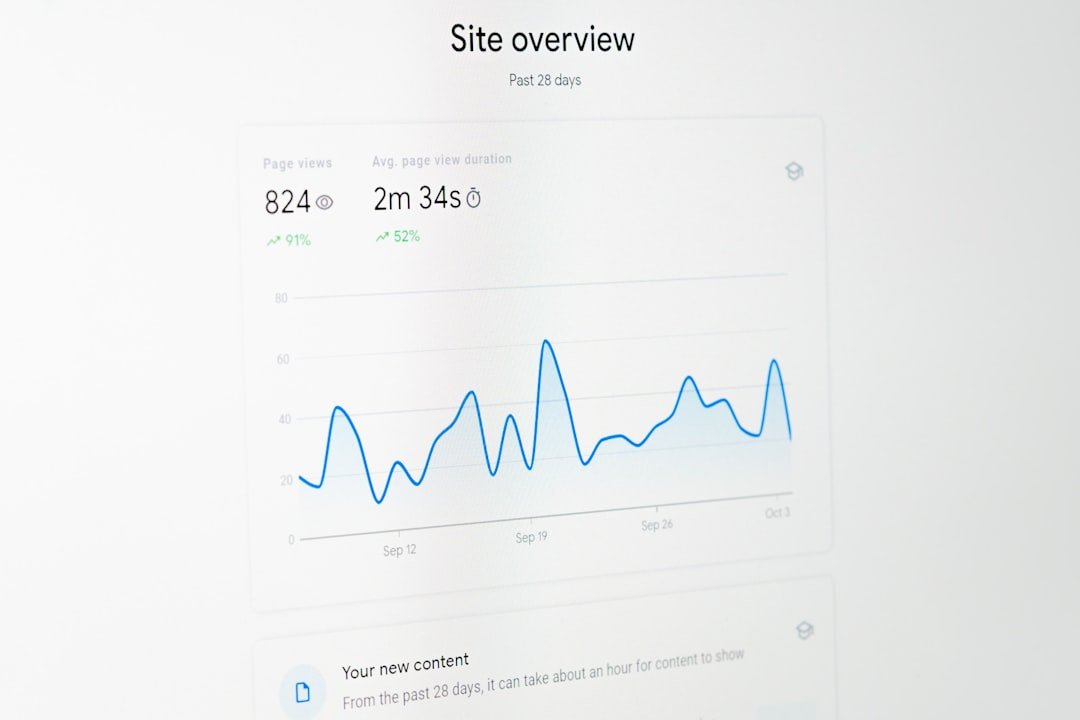
Getting more out of what you already have is the main goal of conversion rate optimization, or CRO. To put it simply, it’s the process of making improvements to your website or landing page in order to raise the proportion of visitors who finish a desired action, such as completing a form, making a purchase, or subscribing to a newsletter. CRO assists you in extracting more value from the traffic you already receive rather than pursuing additional traffic. Consider it similar to tuning up your car; instead of purchasing a new vehicle, you are improving the efficiency of the one you already own. This is a methodical approach to comprehending your users and directing them towards your objectives rather than a magic bullet. Conversion rate optimization is more than just a nice-to-have; it’s an essential component of long-term online growth, so why should you care?
Revenue growth without an increase in advertising expenditures. This is arguably the most alluring advantage. Assume that the current conversion rate for your website is 2%.
For those interested in enhancing their online business performance, understanding the relationship between web hosting and conversion rate optimization is crucial. A related article that delves into this topic is available at Unlocking Web Hosting’s Power: Your Key to Success Online. This article explores how the right web hosting can significantly impact your website’s speed, reliability, and overall user experience, all of which are essential factors in optimizing conversion rates.
If you can raise that to 3% through CRO, you’ve just increased conversions by 50% without having to spend any additional money on advertising or marketing. Increased sales, leads, and eventually profit are the direct results of this. It’s a very effective way to grow your company.
A deeper comprehension of your clientele. Changing buttons and headlines isn’t all that CRO entails. In-depth analysis of user behavior is a major component of the process.
Sure, here is the sentence with the clickable link:
Check out our new Funnel Landing Page at https://funnel.epoweronlinemarketing.com/
You’ll discover what visitors are searching for, why they are leaving, and how they engage with your website. This knowledge is crucial for guiding not just your CRO initiatives but also your entire marketing plan, product creation, and customer support. In essence, you’re doing continuous, practical market research.
Conversion Rate Optimization (CRO) is a crucial aspect of digital marketing that focuses on increasing the percentage of visitors who complete desired actions on a website. To understand the importance of having a well-optimized website, you might find it insightful to read this article on why having a website is essential for your company. It highlights how a strong online presence can significantly impact your conversion rates and overall business success. For more details, check out the article here.
enhanced UX, or user experience. A website that is optimized for user traffic is nearly always optimized for conversions. You can make your website easier to use and more pleasurable by streamlining pathways, removing obstacles, and clarifying messaging. Happier customers are more likely to stay on your website longer, come back later, & even refer you to others. A strong UX is a brand builder as well as a conversion factor.
Improved Scalability for Expansion. Once your conversion funnel is optimized, you can confidently increase its traffic. Spending money on advertisements to direct visitors to a website with low conversion rates is a waste of money.
However, every visitor to a well-optimized website has a greater chance of converting, increasing the effectiveness and sustainability of your marketing expenditures. It enables more effective business growth. Getting an advantage over competitors. Every advantage matters in the competitive online marketplace of today. You’ll be concentrating on making the most of your current traffic, whereas your rivals may be only interested in increasing their traffic.
This effectiveness can result in lower customer acquisition costs & increased profitability, providing you with a clear edge over companies that haven’t adopted CRO. You’re not just working harder; you’re working smarter. CRO is a continuous, iterative process rather than a one-time task. It is essentially a methodical approach to problem identification, solution formulation, testing, & result analysis.
Step 1: Investigate and gather information. Prior to making any changes, you must comprehend the situation. The goal of this phase is to collect data in order to develop a hypothesis. Numbers Tell a Story in Quantitative Data.
Examining web analytics tools such as Google Analytics is part of this. The following should be identified. Drop-off points: Are customers abandoning particular pages, carts, or forms as they exit your conversion funnel? Pages that receive a lot of traffic but have low conversion rates are excellent candidates for improvement. Device behavior: Do desktop and mobile users convert in different ways?
Sources of traffic: Do specific sources of traffic result in higher or lower conversion rates? Metrics like time on page and bounce rate can reveal interest or disinterest. Qualitative Data: Comprehending the “Why”. Qualitative data helps you understand why things are happening, while quantitative data tells you what is happening.
Accurate hypothesis formation depends on this. Heatmaps & session recordings: You can see where users click, scroll, and even watch recordings of their real browsing sessions with programs like Hotjar or UserTesting. This may highlight friction points, unnoticed components, or difficult navigation. Use customer feedback forms and surveys to ask visitors directly about their experiences.
What appealed to them, what perplexed them, or what prevented them from achieving their objective? User testing: Ask real users to complete particular tasks on your website while voicing their opinions. This unfiltered input is really helpful.
Analyze your competitors to find out what they are doing well and poorly. This may provide inspiration for your own optimization endeavors. Creating Hypotheses is Step 2. After you have your data, you can begin to develop hypotheses, which are educated guesses about what adjustments will increase conversion rates. “If I [make this change], then [this outcome will happen], because [this is my reasoning]” is an example of a well-structured hypothesis.
The “. Hypothesis example.
“I anticipate a rise in ‘Add to Cart’ clicks if I switch the call-to-action button color from blue to orange on the product page. This is because orange stands out more against the product imagery and page background, drawing the user’s attention more successfully.
A “. Step 3: Experimentation (multivariate and A/B testing). Here is the time to test your hypotheses.
To determine which performs better, you make variations of your website’s elements and present them to various audience segments. A/B analysis. This is the most popular type of examination. A page or element’s two versions are compared to one another.
A). You could test two different headlines, two different button colors, or two different image placements, for instance. Version A is viewed by half of your traffic, while version B is viewed by the other half. The objective is to ascertain which version has a higher conversion rate.
Multivariate Analysis (MVT). MVT is more intricate. Rather than testing a single component, you test several components at once to observe how various combinations work. For instance, you may simultaneously test various call-to-action buttons, hero images, and headlines. This can reveal strong interactions between elements, but it takes more time and traffic to reach statistical significance. Analysis and execution comprise Step 4.
It’s time to examine the results after your test has run long enough and gathered enough data to be statistically significant. interpreting the findings. Statistical significance: Use statistical tools to ascertain whether the variation in conversion rates between your variations was caused by the change you made or by pure chance. Learning mindset: You can still discover important information about your users even if a test “fails” (i.e., your version didn’t perform better than the original). A test that fails is not a waste of time.
Putting Winning Variations in Place. Congratulations! You’ve discovered an improvement if your version clearly performs better than the original. Permanently adopt the winning variation.
recording and making revisions. Maintain documentation: List all of your experiments, theories, findings, and insights. This creates a foundation of knowledge for upcoming optimization initiatives. The cycle goes on: A/B testing is a revolving door rather than a finish line. Each successful test may reveal new areas for improvement. What was effective on one page might not be on another, or it could be made even better.
The CRO process involves ongoing enhancement. Despite the fact that every website is different, CRO efforts typically produce positive outcomes in certain common areas. Calls to Action (CTAs). Your call to action (CTA) is a clear directive that tells users what you want them to do next. The presentation as a whole is important, not just the words. Wording should be clear and urgent.
Be specific: Use “Download Your Free Guide,” “Get a Quote,” or “Start Your Free Trial” in place of the generic “Click Here.”. The “. When appropriate, use phrases like “Limited Time Offer,” “Enroll Now – Spaces Filling Fast,” to create a sense of urgency. It can backfire, so avoid creating artificial urgency. I). Pay attention to the advantages: Try “Get Instant Access” rather than “Buy Now.”.
A “. positioning & visibility. Above the fold: Ensure your primary CTA is visible without scrolling, especially on important landing pages. Strategic repetition: Don’t be afraid to repeat your CTA in logical places throughout longer pages.
Visual prominence: Use contrasting colors, larger font sizes, & surrounding white space to make your CTA pop. Button Style and Color. Contrast: The button color should stand out boldly from the background and surrounding elements. Action-oriented design: Give it the appearance of a clickable button rather than just text. Mobile-friendly: Ensure the button is large enough to be easily tapped on a mobile device.
Landing Page Optimization. Landing pages are purpose-built to convert. They should be focused and remove distractions.
Clear Value Proposition. Headline: Your headline should immediately communicate what you offer and why it’s valuable. Sub-headline: Provide more detail and reinforce the unique selling proposition.
Benefits, not just features: Explain how your product or service solves a user’s problem, rather than just listing its attributes. Compelling Visuals. High-quality images/videos: Use visuals that are relevant, engaging, and support your message. Show, don’t just tell: Demonstrate your product in action or show the desired outcome. Avoid stock photo clichés: Opt for authentic and unique imagery where possible.
minimal interruptions. Eliminate navigation menus: To keep users concentrated on the conversion objective, remove links to other sections of your website from landing pages. Steer clear of extraneous elements: Every element on the page should have a function that encourages the user to convert.
Simple, uncluttered design: Users may become overwhelmed and confused by a busy page. Social Proof and Trust Signals. Testimonials and reviews: Real feedback from satisfied customers builds confidence.
Case studies: Show how your product or service has helped others achieve success. Trust badges: Security logos (SSL, payment processors), industry awards, and media mentions can reassure visitors. Guarantees: Offer money-back guarantees or satisfaction guarantees to reduce perceived risk. Website Navigation and User Experience (UX). A smooth journey for the user often equates to a higher conversion rate.
Intuitive Site Structure. Logical hierarchy: Organize your content in a way that makes sense to the user. Clear naming conventions: Menu items and categories should be instantly understandable. Consistent navigation: Ensure your navigation remains consistent across all pages.
Mobile Responsiveness. Adaptive design: Your website must look & function perfectly on all screen sizes. Touch-friendly elements: Buttons, links, and forms should be easy to interact with on touch screens. Fast loading times: Mobile users are even less patient with slow websites. Page Speed. Optimize images: Compress images without sacrificing quality.
Leverage caching: Store common elements so they load faster on subsequent visits. Minimize code: Remove unnecessary CSS, JavaScript, and HTML. Use a Content Delivery Network (CDN): Distribute your content servers globally for faster loading times. Forms and Checkout Process. These are often the final hurdle before conversion, so any friction here can be detrimental.
Simplicity and Clarity. Only ask for essential information: Every extra field is a potential drop-off point. Clear labels and placeholder text: Guide users on what to enter. Error messages: Provide helpful, user-friendly error messages that explain how to fix the problem.
Progress Indicators. Multi-step forms: If your form has multiple steps, use a progress bar to show users how far they’ve come and how much is left. This reduces perceived effort. Guest Checkout Options. Reduce friction for one-time buyers: Not everyone wants to create an account immediately.
Offer a guest checkout option to simplify the process. While the principles of CRO are straightforward, it’s easy to fall into common traps that can hinder your progress. Testing Without a Clear Hypothesis.
Randomly changing elements based on a “hunch” is a waste of time and traffic. Always start with a data-backed hypothesis. Without a hypothesis, you don’t know what you’re testing or why.
Not Reaching Statistical Significance. Ending a test too early or with too little traffic means your results might be due to chance, not your changes. Always ensure your results are statistically significant before making decisions. Copying Competitors Without Understanding “Why”.
While looking at competitors can provide ideas, blindly copying their strategies without understanding their audience, goals, or testing results can be detrimental. What works for them might not work for you. Ignoring Qualitative Data. Relying solely on numbers can be misleading. Qualitative data provides the context and “why” behind user behavior, which is crucial for effective optimization. Without it, you’re guessing at user intent.
Making Drastic Changes in One Go. Big, sweeping changes make it impossible to know what specifically caused any improvement or decline. Test small, focused changes one at a time to accurately pinpoint the impact of each element.
Not Testing Continuously. CRO is an ongoing journey, not a destination. Your audience, products, & market can change, so your optimization efforts should too.
What worked yesterday might not work tomorrow. As technology evolves, so does the landscape of conversion rate optimization. Personalization and AI. Using artificial intelligence and machine learning to deliver personalized experiences to each user based on their behavior, demographics, & preferences is becoming increasingly powerful. This could mean dynamic content, tailored product recommendations, or customized CTAs.
Voice Search and Conversational UI. As voice interfaces become more common, optimizing for natural language and conversational flow will be crucial for converting users through voice search or chatbots. Micro-Conversions. Beyond the main goal (like a purchase), optimizing for smaller, intermediate actions (micro-conversions) like viewing a video, downloading a resource, or adding to wishlist, will help guide users further down the funnel & boost overall conversion rates. Conversion Rate Optimization is a powerful methodology that, when applied systematically, can unlock significant growth for any online business. It shifts the focus from simply attracting more visitors to getting more value from every visitor you already have.
By relentlessly researching, testing, and refining your website, you’re not just improving numbers; you’re building a deeper understanding of your customers and creating a better, more efficient online experience for everyone. It’s a continuous journey of improvement, but one that consistently pays dividends.
.
FAQs

What is Conversion Rate Optimization (CRO)?
Conversion Rate Optimization (CRO) is the process of increasing the percentage of website visitors who take a desired action, such as making a purchase or filling out a contact form. This is achieved by analyzing user behavior and making strategic changes to the website to improve the likelihood of conversion.
Why is Conversion Rate Optimization important?
Conversion Rate Optimization is important because it helps businesses maximize the value of their website traffic. By improving the conversion rate, businesses can generate more leads, increase sales, and ultimately improve their return on investment (ROI) for their digital marketing efforts.
What are some common CRO techniques?
Some common Conversion Rate Optimization techniques include A/B testing, improving website usability, optimizing call-to-action buttons, streamlining the checkout process, and creating targeted landing pages. These techniques are designed to identify and address barriers to conversion and improve the overall user experience.
How is CRO different from SEO?
Conversion Rate Optimization (CRO) focuses on improving the percentage of website visitors who take a desired action, while Search Engine Optimization (SEO) focuses on increasing the quantity and quality of website traffic through organic search engine results. While both are important for a successful online presence, they serve different purposes.
What are the benefits of implementing CRO?
The benefits of implementing Conversion Rate Optimization include increased sales and revenue, improved customer satisfaction, better understanding of user behavior, and a more efficient use of marketing resources. By continuously optimizing for conversions, businesses can achieve sustainable growth and competitive advantage in the digital marketplace.